
sol2070@velhaestante.com.br reviewed The School of Night by Karl Ove Knausgaard (The Morning Star, #4)
Great faustian story
5.0 stars
(em português: sol2070.in/2026/01/school-of-night-karl-ove-knausgaard/ )
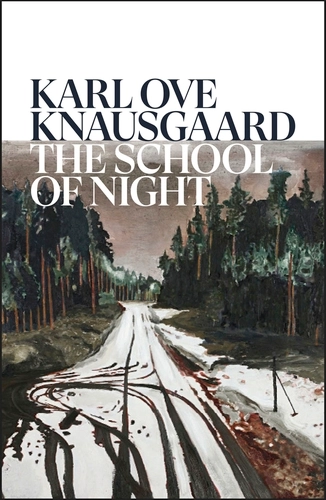
I had marked on the calendar the release of The School of Night (Nattskolen, 2023, 512 pp.) by the Norwegian Karl Ove Knausgaard. It’s the fourth book in the Morning Star series, whose English translation has only just come out.
Blending literary, existentialist fiction with fantastical elements and even horror, the series is a bit looser, with semi-independent volumes. When a new, great star appears in the sky, something changes profoundly in relation to death. The books alternate points of view that are at once ordinary (of common people) and compelling (in their inner richness), all tied to the event.
However, like volume 2, The School of Night is also a flashback-interlude, about a Norwegian photographer in London, from his first artistic steps through consecration and beyond. The trajectory mixes Crime and Punishment with the Faustian myth of worldly success in …
(em português: sol2070.in/2026/01/school-of-night-karl-ove-knausgaard/ )
I had marked on the calendar the release of The School of Night (Nattskolen, 2023, 512 pp.) by the Norwegian Karl Ove Knausgaard. It’s the fourth book in the Morning Star series, whose English translation has only just come out.
Blending literary, existentialist fiction with fantastical elements and even horror, the series is a bit looser, with semi-independent volumes. When a new, great star appears in the sky, something changes profoundly in relation to death. The books alternate points of view that are at once ordinary (of common people) and compelling (in their inner richness), all tied to the event.
However, like volume 2, The School of Night is also a flashback-interlude, about a Norwegian photographer in London, from his first artistic steps through consecration and beyond. The trajectory mixes Crime and Punishment with the Faustian myth of worldly success in exchange for the soul.
There may be some initial disappointment among those expecting an immediate continuation of the third book. But Knausgaard’s talent for magnetizing simply by plunging deep into everyday life and anxieties, without resorting to the outlandish, soon made me forget that initial expectation.
Another striking difference is that there’s no alternation of characters. The first-person narrative sticks solely with the photographer-artist Kristian. It’s also a tale about narcissism, especially artistic narcissism.
It ends up being a literary feat: a hefty page-turner about someone not the least bit likable.
“The School of Night” of the title was a supposed group of artists and scientists from the 16th century, including Christopher Marlowe, author of Doctor Faustus, the first major literary adaptation of the German folk myth about a demonic pact. The group consisted of atheists and practitioners or aspirants of occultism. When Kristian becomes involved with artists adapting Marlowe’s play, his impulses find resonance, and that anti-moral, dark, seductive imaginary begins to dominate him, including an obsession with death and a mysterious Mephistophelean figure.
These nocturnal themes also run through the other books. I particularly remember that the inner conflict of murder (eternalized by Dostoyevsky in Crime and Punishment) was about to begin being explored in The Wolves of Eternity, when a priest and a translator encourage the young Syvert to read the Russian novel. He starts it, but abandons it out of disgust at the homicidal fabulation.
The problem with reading ongoing series is the wait. The School of Night ends on a gigantic cliffhanger, just when the story finally integrates with the larger event of the other books.
In Norway, the series is set to conclude, with the seventh and final part to be published soon.
In English, the next release is Arendal, the 5th volume, to be released in November 2026. Followed by the 6th, I Was Long Dead.