
Lulu/ Lucien reviewed Hidden Figures by Margot Lee Shetterly
Un livre super important sur les premières femmes Afro-Américaines à la Nasa
5.0 stars
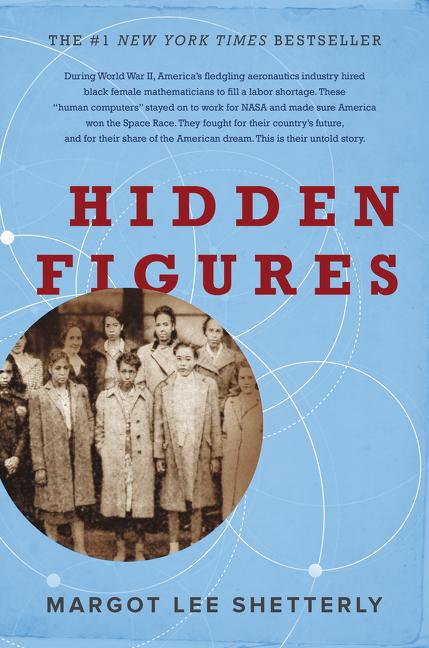
Hidden Figures - Les Figures de l'Ombre en Français - parle des mathématiciennes afro-américaines qui ont joué un rôle crucial dans les programmes de recherche aéronautique et spatiale américains, de la NACA (créée en 1915) à la NASA (qui a remplacé la première en 1958).
Margot L. Shetterly commence - dans un prologue (page 6) avec des souvenirs personnels, une visite à sa famille, des conversations et des activités ; et les premières étapes de recherche pour ce livre. Son père avait rejoint le Langley Research Center en 1964, et c'est l'ensemble principal du reste des 23 chapitres du livre, centrés principalement sur la vie de Dorothy Vaughan, sa carrière - d'abord en tant que professeure de mathématiques, puis sa plus longue carrière commençant en 1943, lorsqu'elle a également rejoint le Centre de recherche de Langley du NACA.
À part elle, des histoires sur Miriam Mann, Katherine Goble, …
Hidden Figures - Les Figures de l'Ombre en Français - parle des mathématiciennes afro-américaines qui ont joué un rôle crucial dans les programmes de recherche aéronautique et spatiale américains, de la NACA (créée en 1915) à la NASA (qui a remplacé la première en 1958).
Margot L. Shetterly commence - dans un prologue (page 6) avec des souvenirs personnels, une visite à sa famille, des conversations et des activités ; et les premières étapes de recherche pour ce livre. Son père avait rejoint le Langley Research Center en 1964, et c'est l'ensemble principal du reste des 23 chapitres du livre, centrés principalement sur la vie de Dorothy Vaughan, sa carrière - d'abord en tant que professeure de mathématiques, puis sa plus longue carrière commençant en 1943, lorsqu'elle a également rejoint le Centre de recherche de Langley du NACA.
À part elle, des histoires sur Miriam Mann, Katherine Goble, Doris Cohen, Dorothy Hoover, Mary Winston Jackson et parfois d'autres femmes apparaissent, principalement à partir des chapitres 6, et sont étroitement liées à des aspects de contexte social, culturel et politique qui ont souvent entravé le développement de ces femmes ; leurs vies et leurs moyens de subsistance : la loi Jim Crow, la ségrégation, le racisme, le sexisme, et pendant les périodes importantes des années 1930 à la fin des années 1960 - en passant par la Grande Dépression, la Seconde Guerre mondiale et la Guerre froide.
Ces histoires se mêlent à celles de la NACA, de la NASA et également des mouvements des droits civiques et des droits des femmes, émaillées à la fois de découvertes scientifiques et d'actes personnels de courage et de défi que certaines de ces femmes ont entrepris pour contrer leurs conditions de ségrégation - comme Mann qui a retiré le panneau indiquant les toilettes sur son lieu de travail - West Area Computing, la zone créée pour la première fois pour les mathématiciennes afro-américaines qui travaillaient comme ordinateurs humains, respectant à la fois la ségrégation de Jim Crow et les besoins en ressources humaines pendant la Seconde Guerre mondiale, comme les hommes étaient partis au front (= comme soldats).
Les formules mathématiques et les recherches de ces femmes ont ouvert la voie, d'avions améliorés et plus sûrs des années 1940 et 1950 jusqu'à l'ère spatiale, y compris l'orbite de la Terre de John Glenn, ainsi que les missions Apollo.
Le terme "Figures cachées" est peut-être, selon les mots de Shetterly, un terme impropre, mais il n'en reste pas moins approprié et intelligent : après tout, les livres d'histoire, même ceux relatifs à l'astronomie, parlaient et détaillaient le plus souvent la vie, le travail et les réalisations des hommes blancs, préférant oublier, omettre ou cacher ceux des femmes, des minorités – et dans ce contexte, des femmes afro-américaines. Le fait que figures soit également un terme en mathématiques (voulant dire chiffres, en anglais) et que le parcours de ces femmes inclut les mathématiques au cœur ne fait qu'ajouter à la pertinence du titre originel.
Ainsi, nous découvrons le travail, la recherche et souvent le sacrifice de soi de ces femmes dans un sens patriotique, pour les réalisations scientifiques et les innovations technologiques qu'elles ont contribué à promouvoir, de leur création à leur réalité - et qui ont souvent été considérées comme atteintes par les hommes pour et avec lesquels ces femmes ont travaillé.
Nous apprenons le racisme, le sexisme et leurs diverses conséquences sociopolitiques qui ont clairement ralenti la course à l'espace des États-Unis contre les réalisations initiales de l'Union soviétique et de la Russie, presque comme un effet secondaire de l'apprentissage de tout ce que ces femmes ont dû traverser, juste pour que leur participation soit reconnue et de changer leur nom d'ordinateur en mathématicienne et pour certaines, en ingénieure, titre donné dans un premier temps uniquement à une élite d'hommes blancs.
Hidden Figures est très instructif et Shetterley remercie les nombreuses personnes impliquées dans ses recherches pour ce livre dans la section Remerciements (p. 273-278) après avoir élargi l'histoire avec des nouvelles des années 1970 à nos jours (2010) sur le la vie des femmes après l'ère spatiale dans l'épilogue (p. 254-271).
Il y a une note importante de l'auteure (p. 272) sur l'utilisation de termes potentiellement discordants tout au long du livre, une bibliographie détaillée (p. 273-286), des notes (287-329), un index (330-365), un guide du groupe de lecture (368) , À propos de l'auteur (369), Lien d'inscription Bookperk (370), Copyright (371), À propos de l'éditeur (373).
Je recommande vivement ce livre super instructif et vous invite à le partager, et à contribuer davantage à lever le voile que l'histoire a couvert sur les contributions importantes de ces femmes, et ainsi donner une meilleure visibilité et une image plus complète de ces Figures Cachées. Son style est fluide, parfois presque en prose, jamais ennuyeux, et très peu de mots techniques sont utilisés ; il s'adresse principalement au profane qui ne connaît pas nécessairement la science derrière certaines des avancées racontées.
En 2016, une édition pour jeunes lecteurs a été publiée pour les lecteurs âgés de 8 à 12 ans. Sa version ebook fait 134 pages, et je le sais car j'avais lu environ 27 pages avant de réaliser que je le lisais et pas la version complète, que j'ai ensuite réservée sur la e-bibliothèque.
Un livre d'images Hidden Figures est sorti en janvier 2018. Le livre a été co-écrit par Margot Lee Shetterly pour les enfants de 4 à 8 ans.
Theodore Melfi en a réalisé l'adaptation cinématographique dramatique en 2016, mais je ne l'ai pas encore vu, je ne peux donc pas attester de sa qualité, mais il a apparemment remporté des prix et a été bien accueilli par la critique.
PS : cette critique, notamment pour l'aspect prose, concerne uniquement la VO en Anglais - je ne sais pas si la traduction Française ait inclus une telle fluidité.
TAGS / Mots clés : Seconde guerre mondiale, Féminisme, Femmes afro-américaines, Racisme, Histoire des Mathématiques, Astronautique,10*,(2016),Documentaire, Biographie, Histoire des Noirs et des Afro-Américain,